
InteropHub: From meetings to sustained community progress
Interoperability advances when people can work together over time. InteropHub connects topics, people, meetings, resources, and outcomes so organizations can sustain more of that work—and help more people share responsibility for moving it forward.
Interoperability is work we do together
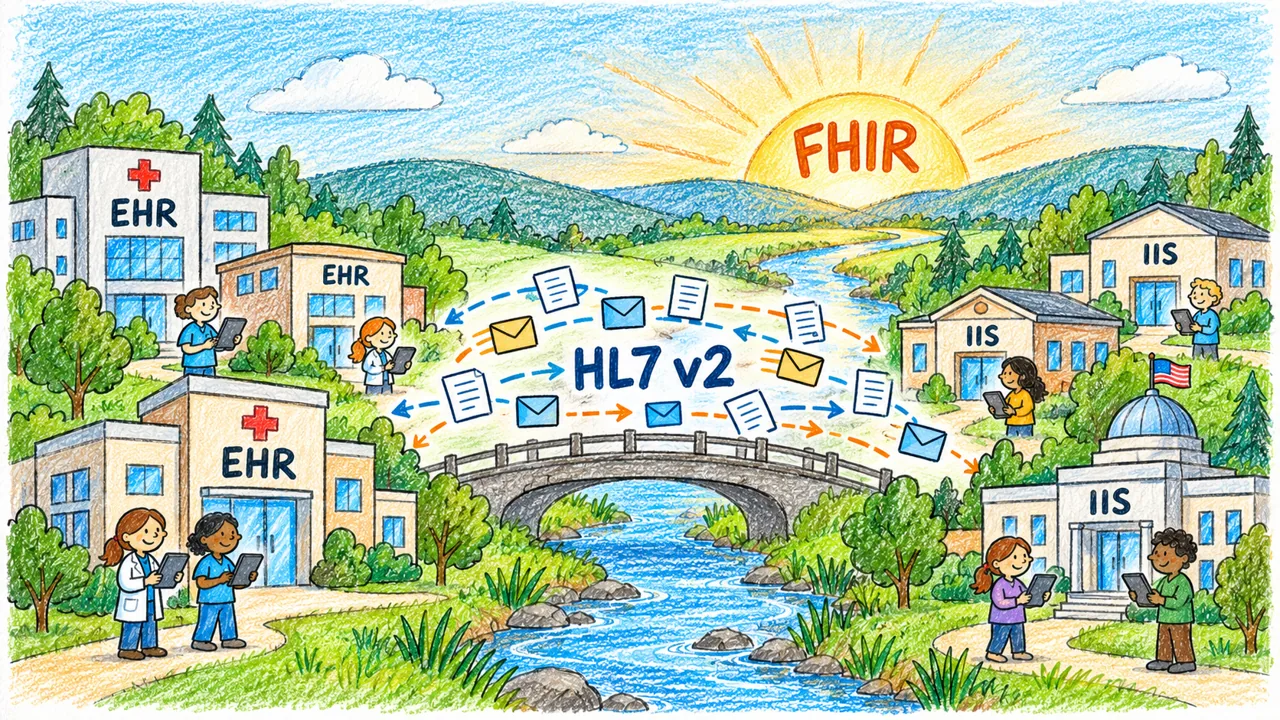
Behind every successful exchange of health information is a community that has agreed on how to make it work. Public health programs, jurisdictions, vendors, and standards experts bring different responsibilities and experience. Progress depends on their ability to understand one another, resolve questions, and develop a shared technical direction.
At the American Immunization Registry Association (AIRA), this work includes supporting the community around immunization information systems. Established HL7 v2 exchange connects clinical and public health systems today. Exploring FHIR introduced additional possibilities—and a growing set of questions about where those possibilities could help.
That exploration helped shape InteropHub. The need it addresses extends across interoperability: communities need a dependable way to organize their work, involve the right people, and carry progress from one conversation to the next.
More possibilities require more capacity
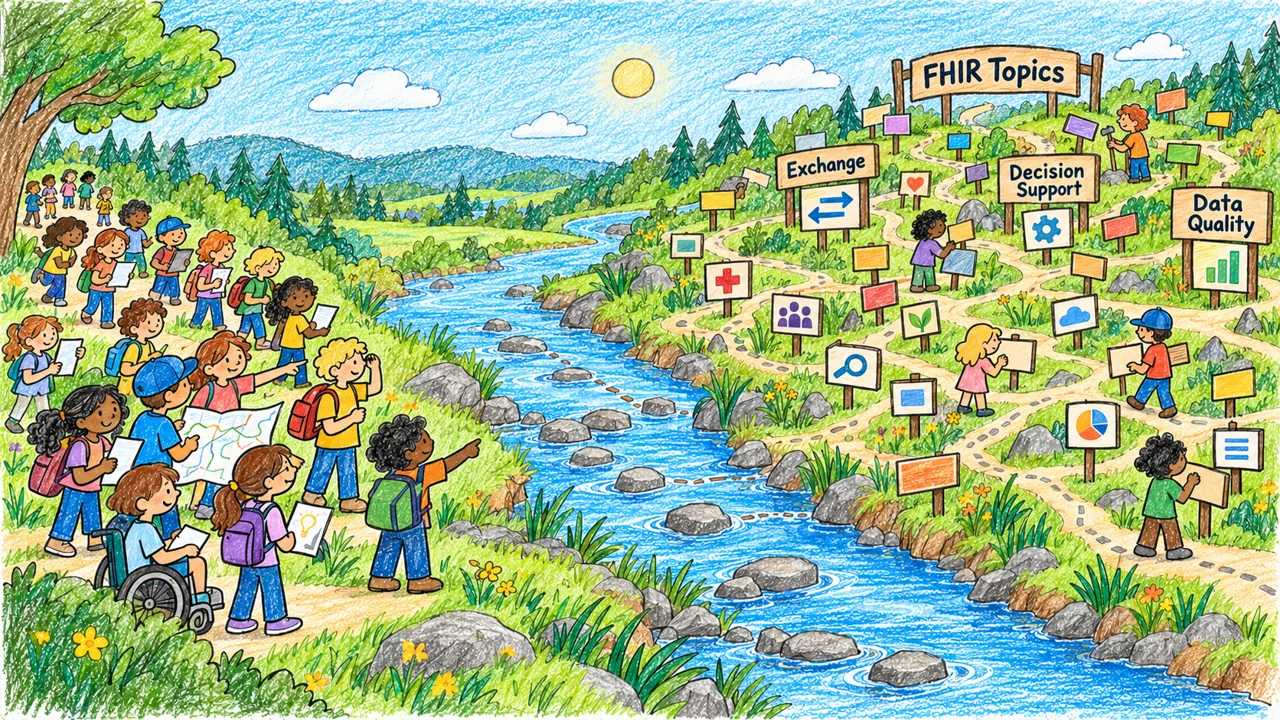
What initially sounded like one transition opened into many possible directions. AIRA's Emerging Standards discussions grew to encompass more than a hundred topics and a widening community of interested people. Each topic could bring its own questions, stakeholders, meetings, and next steps.
Modernization asks organizations to sustain this kind of breadth. Advancing a dozen related initiatives at once requires more than repeating the effort used to advance one. People need to find relevant work, facilitators need to connect expertise with questions, and each initiative needs enough continuity to keep moving.
The community may already have the knowledge and interest. The organizational challenge is giving that distributed capacity a structure through which it can contribute.
One person can hold a great deal together
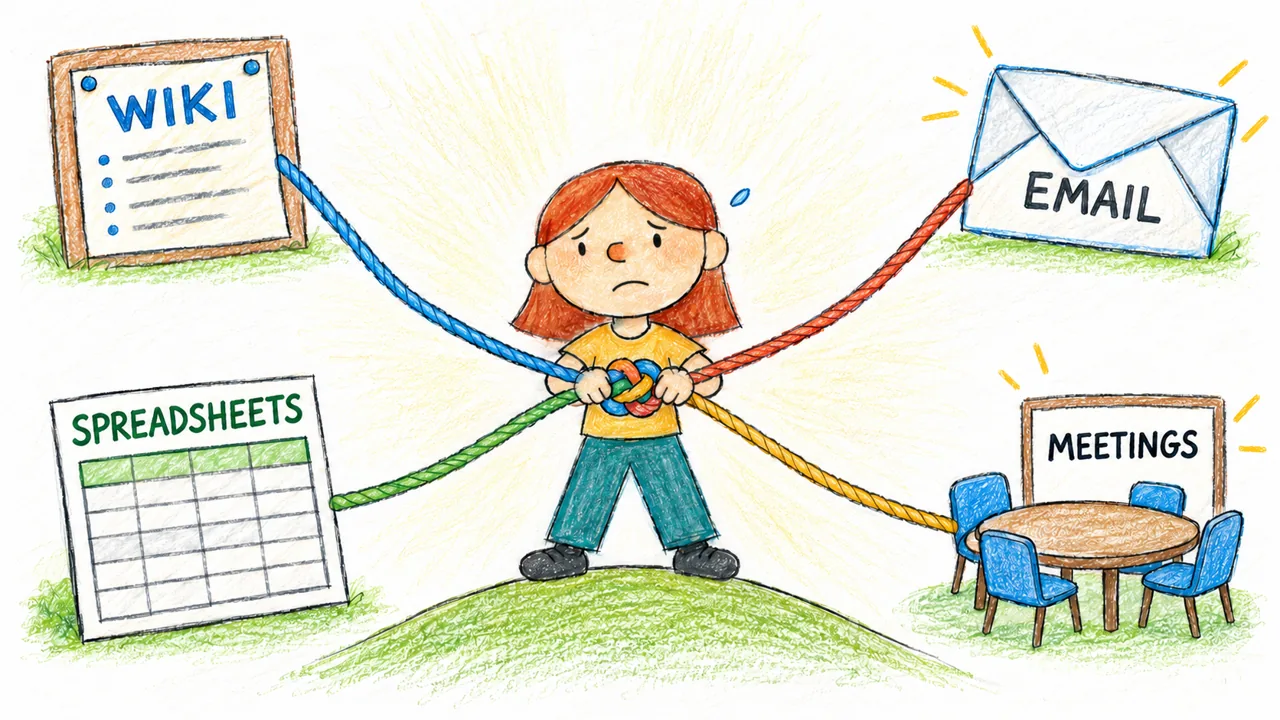
Community work often succeeds because someone takes responsibility for making it happen. That person knows the history, remembers who should be involved, prepares the agenda, recruits presenters, and follows up afterward. Their relationships and judgment are essential.
The information supporting that work is often spread across email, spreadsheets, wiki pages, documents, and meeting notes. Each tool serves a purpose. The coordinator supplies the connections between them.
As the portfolio grows, more of that person's attention goes toward maintaining those connections. A pause can mean reconstructing the history. A handoff can require explaining what happened, why it happened, and what remains unresolved. Another promising initiative becomes another demand on the same limited capacity.
The question is how to extend a capable person's leadership while making the work easier for others to carry forward.
Give the work a shared, lasting home
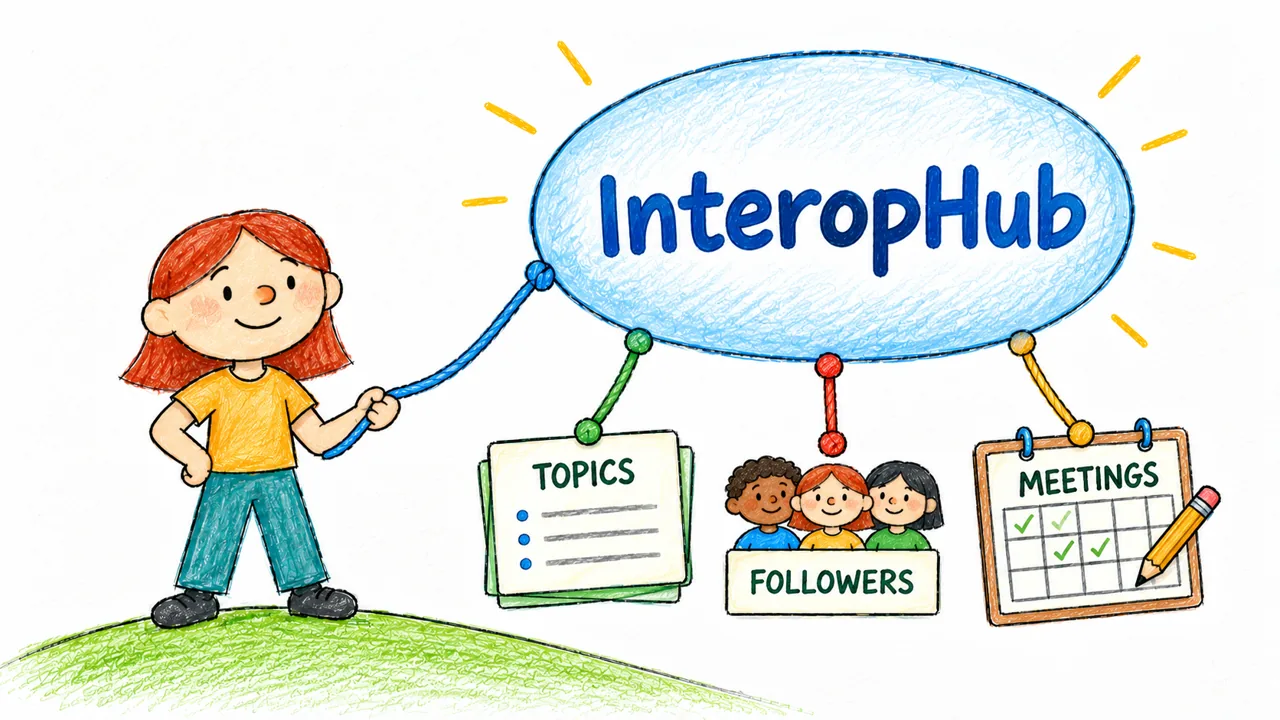
InteropHub brings familiar activities into one connected structure. Topics connect to the people who follow them, the meetings where they are discussed, and the resources and outcomes that give the work context.
The topic is the lasting home for the work. A meeting is one occasion for moving it forward. When a discussion produces a direction, an open question, an action, or a reason for a choice, that contribution belongs with the topic so the next discussion can build on it.
This gives facilitators a repeatable way to prepare and continue the work: make the question visible, identify interested people, involve contributors early, hold a focused discussion, and preserve what changed. Followers provide a starting point for outreach, while facilitators continue to identify others whose perspectives are needed.
The coordinator still exercises judgment and builds relationships. A shared record allows colleagues and community contributors to take on defined responsibilities with the context they need. If work pauses or leadership changes, the group has somewhere to resume.
Build the capacity to move more work forward
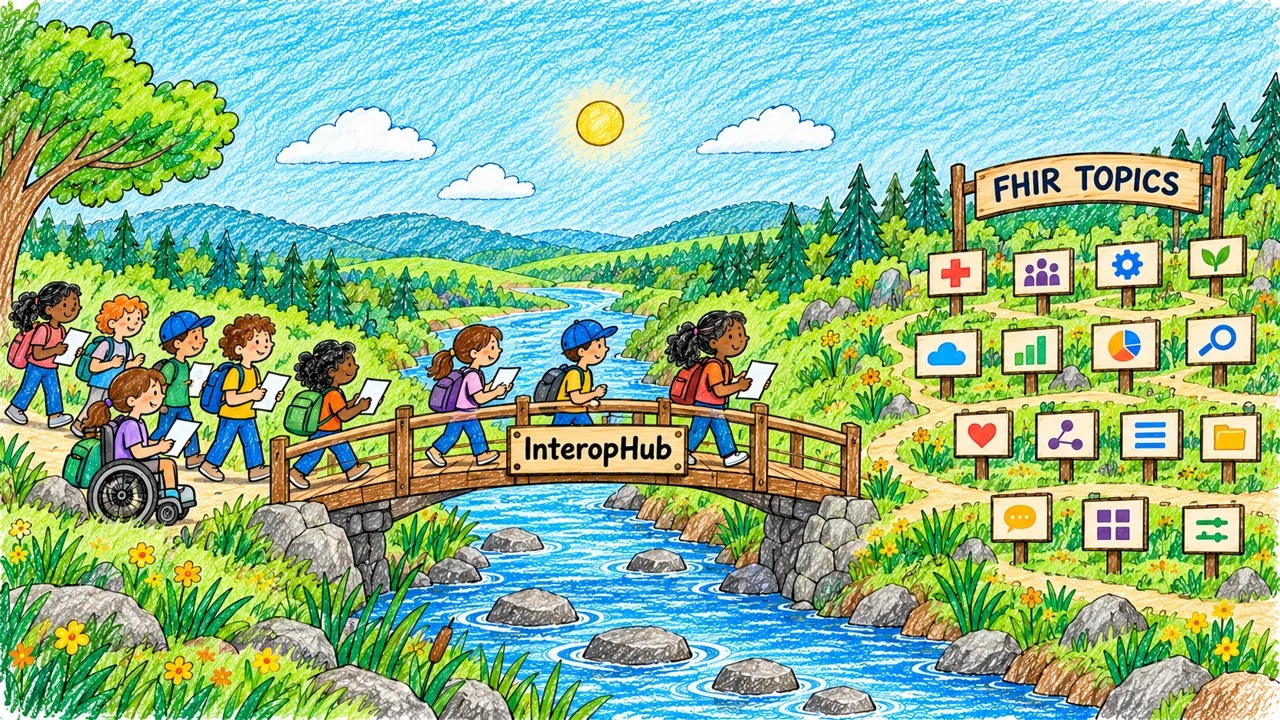
The purpose of InteropHub is to help organizations scale and replicate effective community work. A facilitator can support a broader portfolio when every initiative does not require them to personally maintain every connection. Colleagues can share meeting responsibilities. Contributors can develop into topic leaders. New efforts can begin with an established way of working.
That capacity comes from software and practice together: clear responsibilities, thoughtful preparation, useful records, and people willing to carry the next step. InteropHub provides a structure for making those practices easier to repeat across related efforts.
Over time, this approach can help promising ideas develop into clearer use cases, shared technical directions, and projects with a community prepared to act. Funding can then support concentrated development and implementation on an existing foundation of understanding and participation.
The ambition is to help an organization sustain a dozen interoperability initiatives with the continuity and attention each deserves. The software should recede into the background, leaving the community's work visible: what matters, what has been learned, what remains open, and who can help move it forward.
Make community work easier to organize, easier to share, easier to continue, and harder to lose.